

Board minutes: why they are more important than many boards realize
Board minutes are often seen as an administrative formality. Something that "just has to be done" after a meeting.
However, research shows that board minutes can actually play a much greater role in how organizations make decisions, follow up on strategy, and protect the board legally.
In this article, we explorewhy minutes are more important than many people think – and what research says about the work of boards behind the scenes.
What boards actually do at their meetings
A study analyzing actual board minutes from several organizations showed thatapproximately two-thirds of all issues discussed by boards concern management follow-up.
This means that much of the board's work involves:
- monitor operations
- review reports and supporting documentation
- ensure that the organization develops in the right direction
The research also showed that boards sometimes request additional information or follow-up on approximately8% of the issues discussed, which shows how minutes can reflect the actual work and decisions of the board.
In short:board minutes are one of the best ways to understand what a board actually does.
Minutes are not just documentation—they are legal protection
Board minutes are not just internal notes. In many organizations, they are consideredformal legal documentsthat document the board's decisions and responsibilities.
Well-written minutes can:
- show how the board reasoned before making important decisions
- reduce the risk of conflicts or misunderstandings
- serve as a basis for audits or reviews
In some cases, minutes may even play a role in legal proceedings. Clearly documented deliberations and decisions can help an organization demonstrate that its board has acted responsibly.
At the same time, many boards lack structure.
Despite the importance of protocols, surveys show that many organizations still lack clear procedures.
In a global survey, for example,only about 65% of organizations reportedthat they consistently document meeting minutes, often due to a lack of structure or clear templates.
This means that many boards risk:
- miss important history
- find it difficult to follow up on decisions
- spend unnecessary time on administration
One simple way to improve this is to usea standardized template for board minutes.
What a good board meeting agenda should contain
Effective board minutes do not need to be long, but they should be clear and structured.
Most protocols contain:
Basic information
- date and place of the meeting
- participants and absentees
- meeting agenda
Decisions and discussions
- important issues addressed
- decisions made
- responsible persons
Follow-up
- tasks to be performed
- next meeting date
When minutes follow a clear structure, it becomes much easier for the board tomaintain continuity in its work over time.
Digital tools are changing board work
More and more organizations are now switching from email and document folders to digital tools for board work.
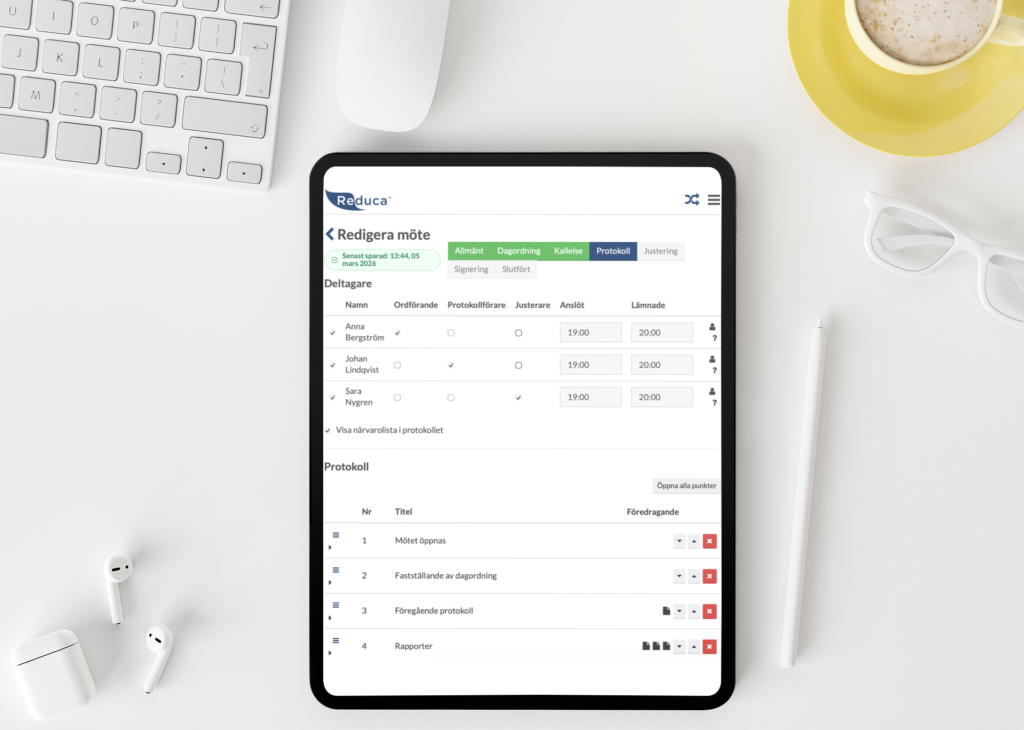
So-calledboard portalsenable boards to collect documents, meeting materials, and minutes in one place and collaborate digitally.
For boards, this often means:
- better overview of decisions
- easier follow-up
- more secure document management
It also means that protocols are no longer just static documents—they are part of a larger workflow.
Download our template for board minutes
To simplify board minutes, we have developed afree templatetailored for:
- associations
- foundations
- company
The template helps you structure meetings and document decisions in a clear manner.
👉 Download a template for board minutes here
If you want to take the next step in structuring board work, you can also see howReducahelps boards collect meetings, documents, and decisions in a digital workflow.
