







Board work
Board work is a central part of an organization's governance. In this guide, we go through how board work functions, what parts it includes, and how modern boards work digitally.
Whether it is an association, a foundation, or a company, the board of directors is responsible for important decisions regarding strategy, finances, and the long-term development of the organization.
Digital board work means gathering all board-related work in a structured workflow, where meetings, documents, and decisions are handled in one place.
What is board work?
The board of associations shall ensure that the organization complies with its statutes, objectives, and regulations.
Common tasks for association boards are:
planning board meetings
monitoring of finances and budget
planning of activities and operations
membership issues
documentation of decisions
Foundations often have a clearly defined purpose that the board is responsible for managing and following up on. The board must ensure that the foundation's assets are used for their intended purpose and that the foundation's activities are conducted in a responsible manner.
Board work in foundations may involve, for example:
monitoring the foundation's finances and administration
decisions on dividends or projects
review of reports and decision-making documentation
documentation of decisions in minutes
In companies, the board often acts as strategic support to the company management. The board can contribute experience, perspective, and structure to important decisions.
Common areas that the board works with are:
company strategy and development
financial follow-up
investments and major decisions
risk management
monitoring of activities
What does board work involve?
1. Planning board meetings
Board meetings are one of the most important parts of board work. During meetings, the organization's development is discussed, important decisions are made, and operations are followed up on.
This often means that the board works with:
planning meeting dates and meeting calendars
preparation of meeting agendas
distribution of meeting materials in good time
clear structure for the issues to be addressed
2. Board materials
Before each board meeting, the board needs to review relevant information in order to make well-informed decisions. This material is often referred to as board material or decision-making documentation.
Board materials may consist of, for example:
financial reports
activity reports
project proposal
budget documentation
strategic analyses
3. Decision-making
A key task for the board is to make decisions that affect the organization's development and operations. These decisions can range from strategic issues to more operational decisions.
Examples of decisions that a board of directors may make are:
budget approval
decisions on investments or projects
setting strategic goals
decisions regarding the organization's development
follow-up on previous decisions
4. Board minutes
After each board meeting, the meeting is documented in board minutes. The minutes serve as formal documentation of the issues that have been discussed and the decisions that have been made.
Board minutes usually contain:
date and participants at the meeting
which cases have been dealt with
what decisions have been made
any reservations or comments
5. Follow-up on decisions
Board work is not just about making decisions—it is also about following up on them. Follow-up is therefore an important part of the board's work.
This may mean, for example, that the board:
follows up on previous decisions at the next meeting
evaluates the results of completed projects
examines economic development
follows up on strategic goals
6. A coherent workflow
All these parts—meeting planning, board materials, decision-making, minutes, and follow-up—are interconnected and together form the board's workflow.
When these tasks are well organized, board work becomes more structured and efficient. For many organizations, this means that the board can focus more on strategic issues and less on administration.
Common challenges in board work
Scattered documents
Board materials are often sent via email or shared in various document folders. This can make it difficult to find the right version or get an overview of the material.
Unclear structure regarding meetings
Meeting agendas, decision-making documentation, and minutes may end up in different places and be difficult to follow up on over time, as well as having an unclear structure before, during, and after meetings.
Difficult to follow up on decisions
When decisions are documented manually, it can be difficult to keep track of what has been decided and what tasks need to be followed up on.
Lack of overview
When information is scattered across multiple systems or in different documents, it can be difficult for the board to quickly gain an overview of important issues.
Benefits of digital board work
By consolidating board work on a digital platform, organizations can create better structure and clarity in their work.
Digital board work can contribute to:
- Clear structure
- Streamlined decision-making processes
- Good cooperation
- Secure document sharing
- Easy handover
- Clear history
Board work on a digital platform
A digital platform for board work can serve as a hub for the entire board's workflow. In a board platform, the board can, among other things:
- Plan and conduct board meetings
- Collect, manage, and share board materials
- Write and sign board minutes
- Follow up on decisions and tasks
- Distribute responsibilities and assign tasks
Board work at Reduca
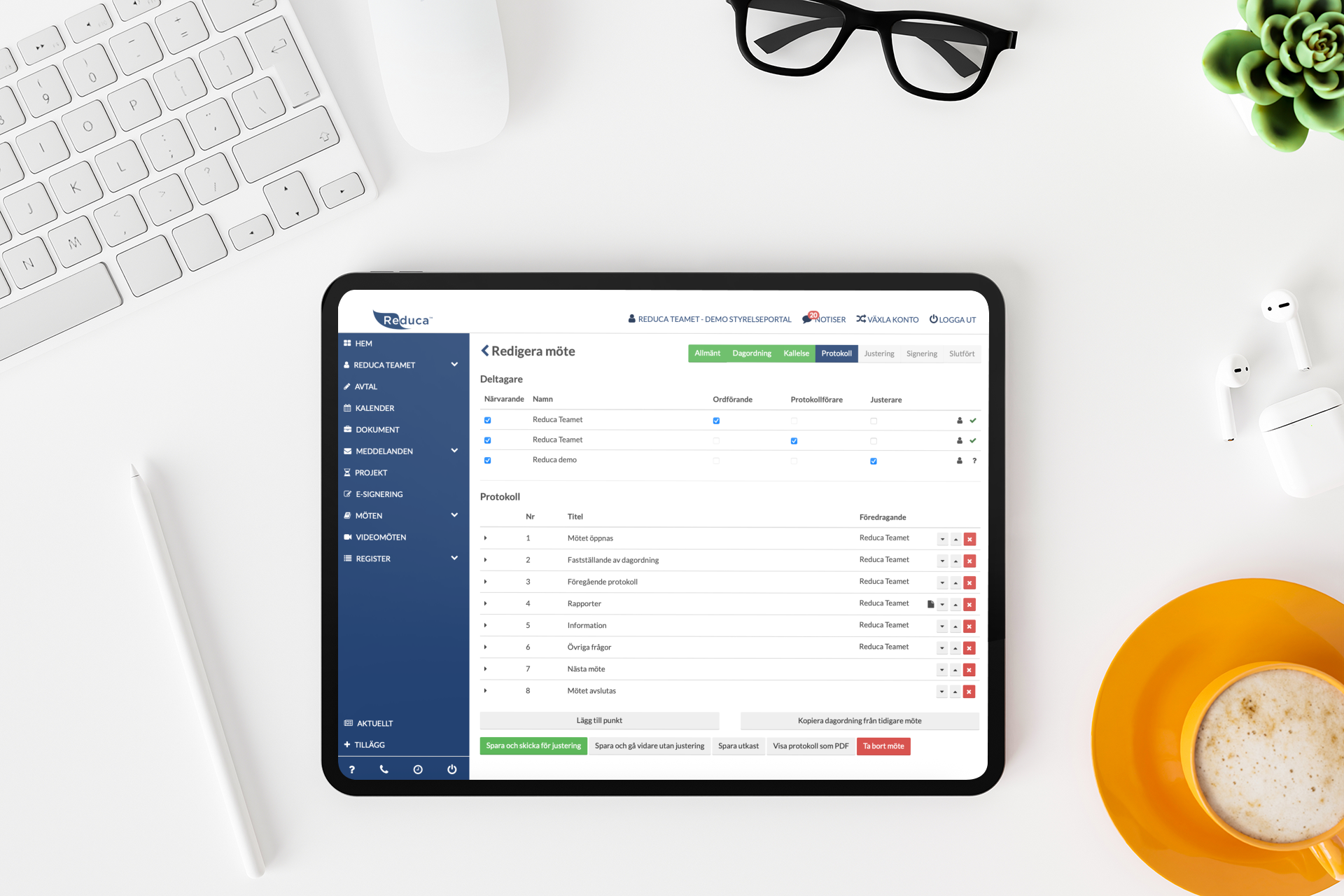
Reduca is a platform that brings together all board work in a structured digital workflow. In Reduca, boards can, among other things:
- Plan, create, and conduct board meetings
- Collect, manage, edit, and share documents
- Send out notices, write and sign board minutes
- Create decision logs and assign tasks
- Distribute responsibilities and manage agreements
Get started with Reduca
Reduca provides you with the structure for meetings, decisions, and follow-ups—
—so that the board can focus on operations instead of administration.
Keep yourself updated on the latest news
Reduca launches a partnership with the Swedish Padel Federation
Reduca has launched a partnership with the Swedish Padel Federation with the aim of streamlining and digitizing board work in padel clubs. Padel is one of Sweden’s fastest-growing sports, and more and more clubs are being formed across the country. At the same time, many clubs are largely run on a volunteer basis, which means that board work often needs to be efficient and structured to function effectively over time. Through […]
Things to keep in mind before, during, and after the annual meeting
The annual general meeting is one of the most important events of the fiscal year. It is where key decisions are made, the board is held accountable, and members gain insight and the opportunity to influence the organization. With the right preparation and structure, the annual general meeting can be both efficient and engaging. Here, we’ll go over what to keep in mind before, during, and after the meeting—as well as […]
What's New in Reduca: Smarter Workflow and a Digital Annual Cycle for the Board
Today’s board work places ever-greater demands on structure, transparency, and effective collaboration. With Reduca, you can consolidate the entire board process into a cohesive workflow—from planning to execution and follow-up. We are now launching an update with several new features and improvements, with a particular focus on enhancing overview and planning through our enhanced annual cycle. A […]
Digital and free of charge
Book a demo
During a demo you will:
- Review of the platform
- Answers to questions and concerns
- Tips and suggestions
